
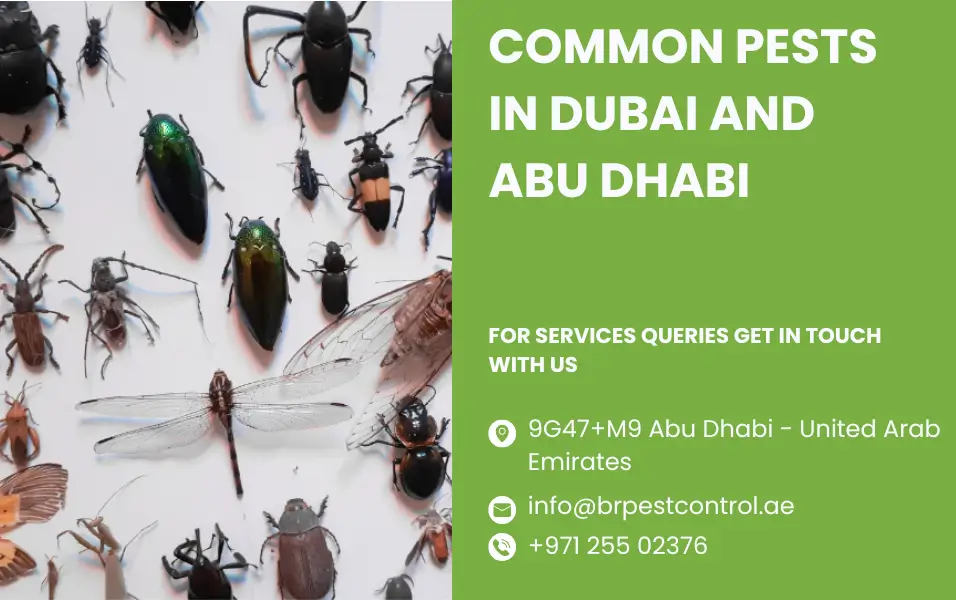
Abu Dhabi’s warm climate and year-round residential and commercial activity can create favorable conditions for a wide range of insects and other household pests. Knowing the common pests in Abu Dhabi helps property owners recognize early warning signs and take the right preventive action before a minor problem develops into a larger infestation.
From cockroaches and ants to termites, rodents, bed bugs, flies, and wasps, each pest behaves differently and requires a different approach. Good pest management starts with identifying the species, understanding what attracts it, and removing the conditions that allow it to survive.
10 Common Pests Found in Abu Dhabi
1. Cockroaches
Cockroaches are among the most troublesome indoor pests because they can survive in kitchens, bathrooms, storage areas, drainage points, and other places where food and moisture are available.
They are particularly concerning around food-preparation areas because they can move between contaminated surfaces and food-contact areas. Signs of activity may include live cockroaches, droppings, egg cases, unpleasant odors, or increased activity after dark.
Keeping food sealed, cleaning spills quickly, fixing water leaks, and reducing hiding places can help. If cockroach activity continues despite regular cleaning, the infestation may be established in areas that are difficult to reach.
2. Ants
Ants commonly enter buildings while searching for food and water. A few ants near a kitchen counter can quickly turn into a visible trail when they discover a dependable food source.
Sugar, crumbs, spilled drinks, pet food, and improperly stored food can attract them. Sealing food containers and cleaning surfaces regularly can reduce the attraction, but persistent trails may indicate a colony nearby.
Rather than concentrating only on visible ants, effective control should also consider their entry points and nesting locations.
3. Termites
Termites can be particularly damaging because their activity may remain hidden until structural or wooden materials show noticeable signs of deterioration.
Possible warning signs include:
- Hollow-sounding wooden surfaces
- Damaged or weakened wood
- Mud tubes around walls or foundations
- Discarded wings near windows or light sources
- Doors or wooden fittings that become unusually difficult to close
Termite prevention is especially important for villas, buildings with extensive wooden fixtures, and properties where previous termite activity has been identified.
4. Bed Bugs
Bed bugs are small, highly persistent insects that hide in mattresses, bed frames, furniture joints, upholstery, and cracks close to sleeping areas.
They are often transported into properties through luggage, clothing, furniture, or other personal belongings. Because they can remain hidden during the day, discovering one insect does not necessarily indicate the full extent of the problem.
Common clues include small dark spots on bedding, shed skins, eggs, live insects, or repeated itchy bites after sleeping.
Early inspection is important because bed bug infestations can spread from one room to another when untreated.
5. Rats and Mice
Rodents can create both hygiene and property concerns. They may contaminate food, damage stored materials, and chew electrical cables, packaging, insulation, and other items.
Look for signs such as:
- Droppings around food or storage areas
- Gnaw marks
- Scratching sounds
- Damaged packaging
- Greasy marks along frequently used routes
- Unusual odors
Rodent control should not focus only on removing the animals. Sealing gaps, improving waste management, protecting food storage, and removing accessible water sources are important parts of long-term prevention.
6. Flies
Flies can become a significant problem around kitchens, restaurants, waste-storage areas, drains, and other places where organic material is available.
Their rapid movement between waste and food-contact surfaces makes good sanitation particularly important. Open rubbish, uncovered food, overflowing bins, and poorly maintained drainage areas can all increase fly activity.
Keeping bins closed, cleaning food-preparation surfaces, removing waste regularly, and addressing potential breeding sites can help reduce the problem.
7. Mosquitoes
Mosquitoes are strongly associated with standing water. Even relatively small amounts of stagnant water can provide suitable breeding conditions.
Property owners should check plant trays, outdoor containers, drains, roof areas, water-storage locations, and other places where water may collect.
Reducing standing water is one of the most practical preventive measures. Screens, closed doors and windows, and appropriate professional treatment can provide additional protection when mosquito activity remains high.
8. Wasps
Wasps may build nests around roofs, balconies, gardens, wall cavities, sheds, and other sheltered locations. Their presence becomes more concerning when a nest is close to doors, walkways, children's areas, or frequently occupied outdoor spaces.
A wasp nest should not be disturbed unnecessarily. People with known sting allergies face a higher risk of serious reactions, so professional removal is a safer option when a nest is established near occupied areas.
9. Spiders
Spiders commonly appear in quiet, undisturbed areas such as corners, storage spaces, garages, ceilings, and outdoor structures.
Their presence can sometimes indicate that other insects are readily available as a food source. Regular cleaning, reducing clutter, sealing gaps, and managing other insect populations can help reduce spider activity.
Not every spider requires professional treatment, but an unusual increase in activity or uncertainty about the species warrants closer inspection.
10. Lizards
Small lizards can occasionally enter homes and commercial properties, particularly where insects provide an accessible food supply.
Their presence is often connected indirectly to insect activity. Reducing insects around doors, windows, outdoor lighting, gardens, and waste areas can therefore make a property less attractive to them.
Sealing openings and maintaining screens can also reduce the chance of lizards entering indoor spaces.
Why Do Pests Enter Abu Dhabi Properties?
Pests do not usually appear without a reason. Most infestations develop when a property provides one or more of the basic things pests need to survive:
Food: Open food, crumbs, rubbish, pet food, and poorly sealed containers can attract insects and rodents.
Water: Leaking pipes, damp areas, blocked drains, and standing water can support pest activity.
Shelter: Cracks, wall cavities, clutter, cabinets, storage areas, and structural gaps provide hiding places.
Access: Gaps around doors, windows, pipes, drains, and utility lines can create entry routes.
Removing these attractants can make a property considerably less appealing to pests.
How to Prevent Pest Infestations
You do not need to wait for a visible infestation before taking action. A few consistent habits can reduce pest activity considerably.
Keep Food Properly Stored
Use sealed containers for dry foods and avoid leaving uncovered food on kitchen counters. Clean crumbs and spills soon after they occur.
Control Moisture
Repair leaking taps and pipes, keep bathrooms ventilated, and investigate unexplained dampness. Outdoor areas should also be checked for standing water.
Seal Entry Points
Inspect gaps around doors, windows, pipes, drains, vents, and utility openings. Even small openings can become access routes for insects and rodents.
Manage Waste Correctly
Use covered bins and remove household or commercial waste regularly. Food waste should not remain exposed for extended periods.
Reduce Clutter
Cardboard boxes, unused furniture, piles of materials, and crowded storage areas can provide hiding places for cockroaches, rodents, spiders, and other pests.
Inspect New Items
Check second-hand furniture, luggage, boxes, and other items before bringing them indoors. This is particularly useful for reducing the risk of introducing bed bugs.
When Is Professional Pest Control Necessary?
DIY prevention can be useful for minor problems, but professional inspection becomes more important when pest activity is persistent, widespread, or difficult to identify.
Consider professional assistance when you notice repeated cockroach activity, a growing ant trail, suspected termites, rodent droppings, a bed bug infestation, an established wasp nest, or pests returning shortly after household treatment.
The goal should not simply be to kill the pests that are visible. A proper pest-management approach should identify where the pests are coming from, where they are hiding, what is attracting them, and how future activity can be reduced.
Final Takeaway
Understanding the common pests found in Abu Dhabi makes it easier to recognize problems before they become expensive or disruptive. Cockroaches, ants, termites, rodents, bed bugs, flies, mosquitoes, wasps, spiders, and lizards all have different behaviors and control requirements.
Good sanitation, sealed food storage, moisture control, regular inspection, and blocked entry points provide a strong foundation for prevention. When an infestation becomes persistent or involves pests such as termites, rodents, bed bugs, or wasps, professional assessment can help identify the underlying problem and determine an appropriate treatment strategy.